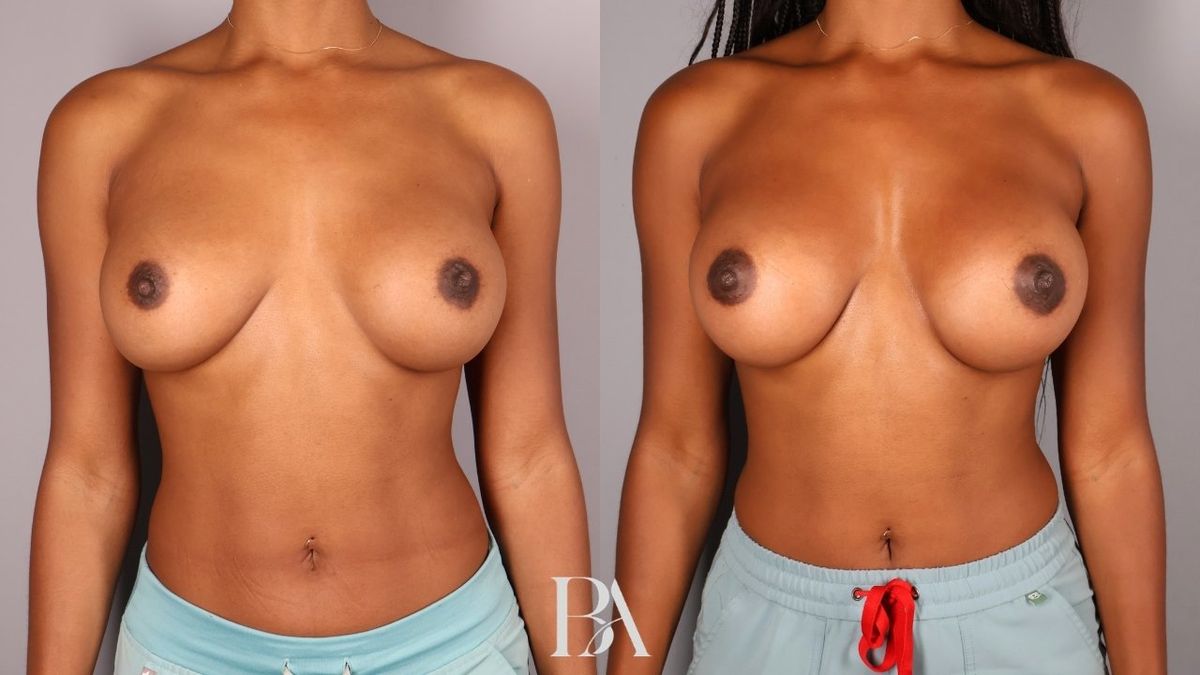
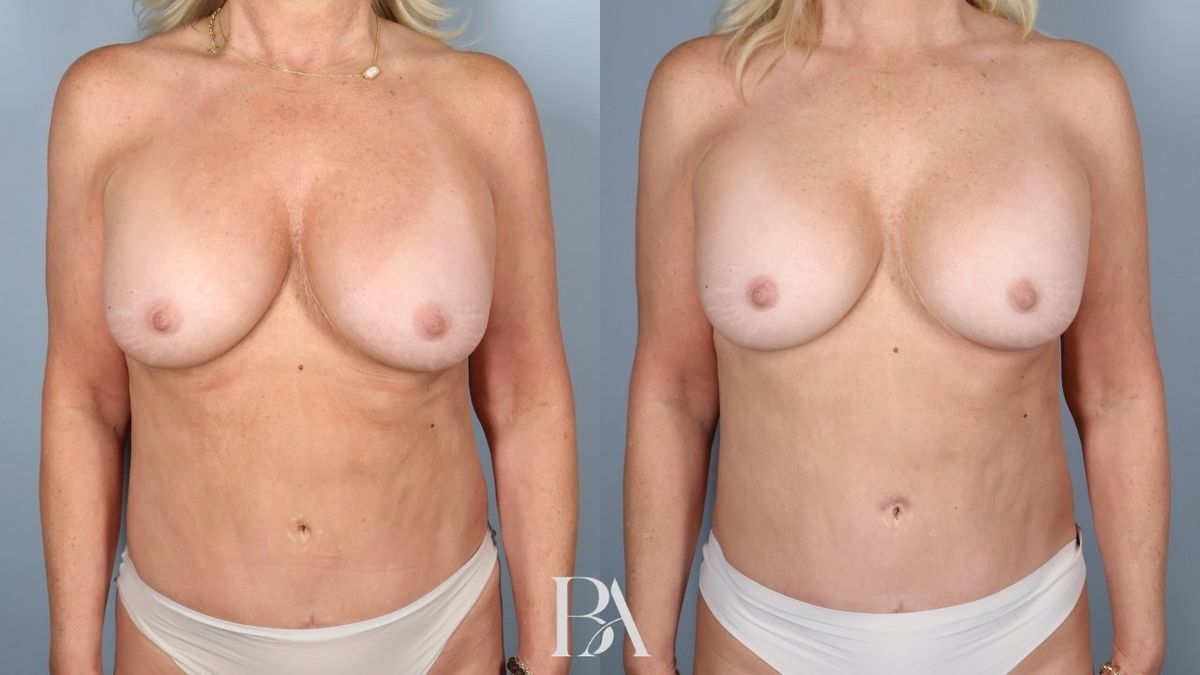
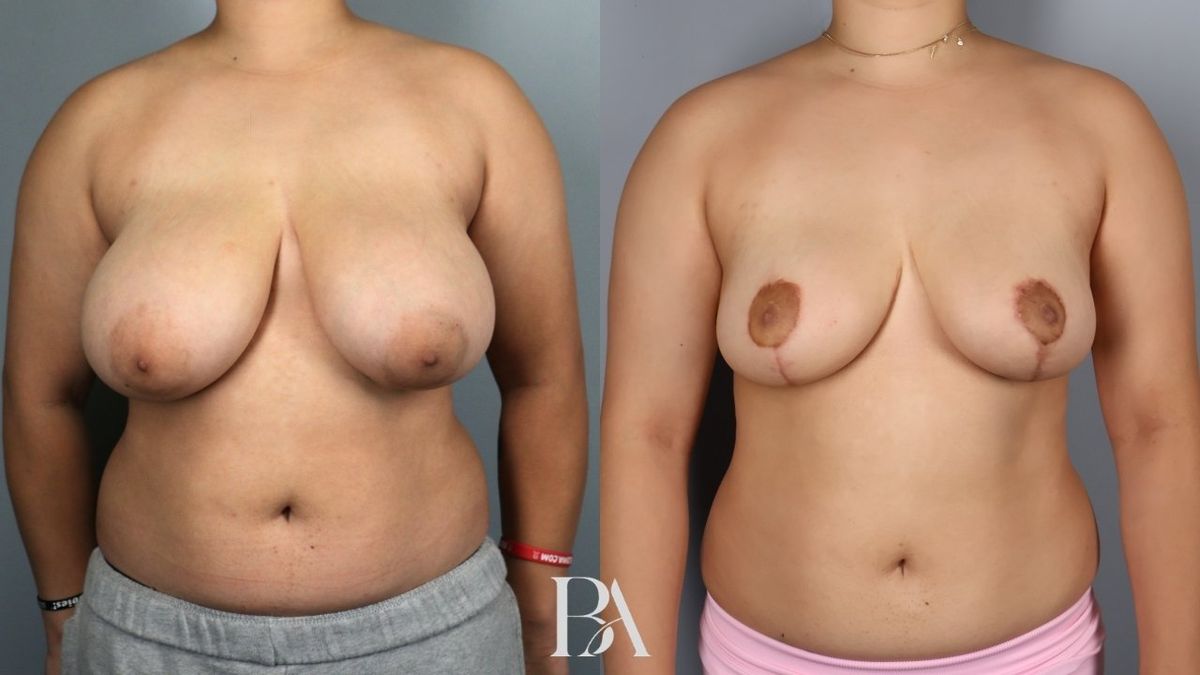
Case #1503
Implant Removal and Replacement
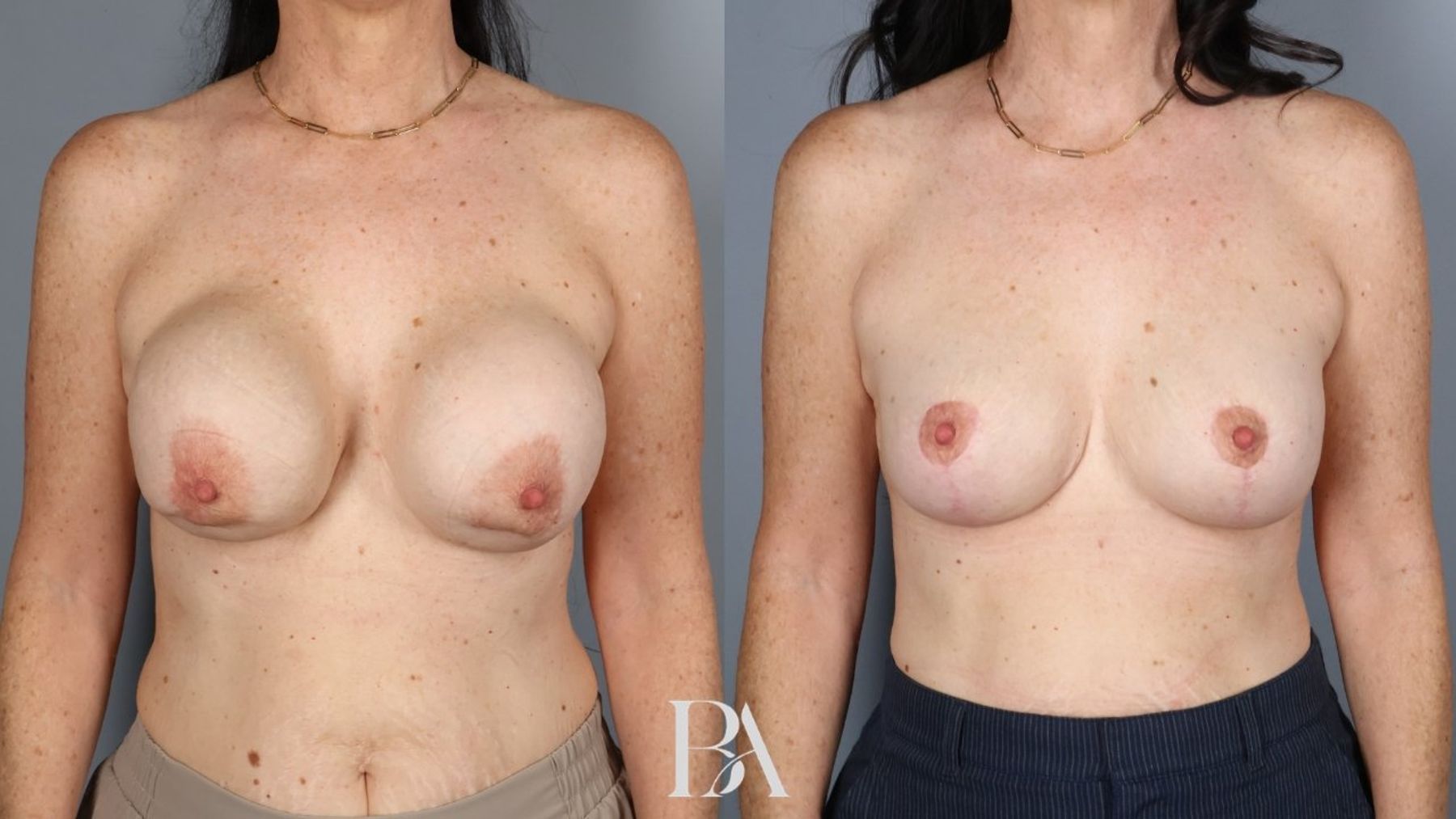
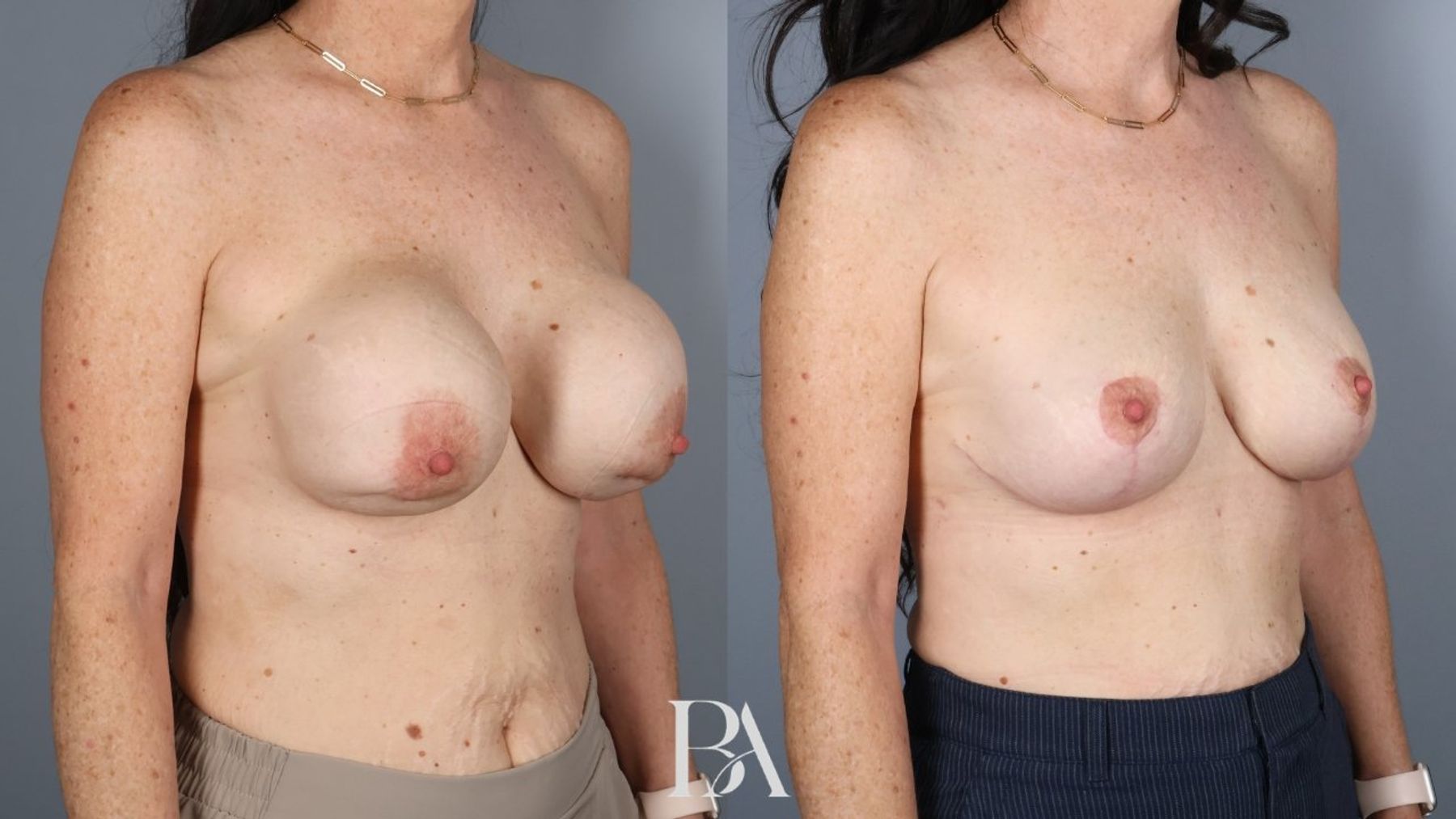
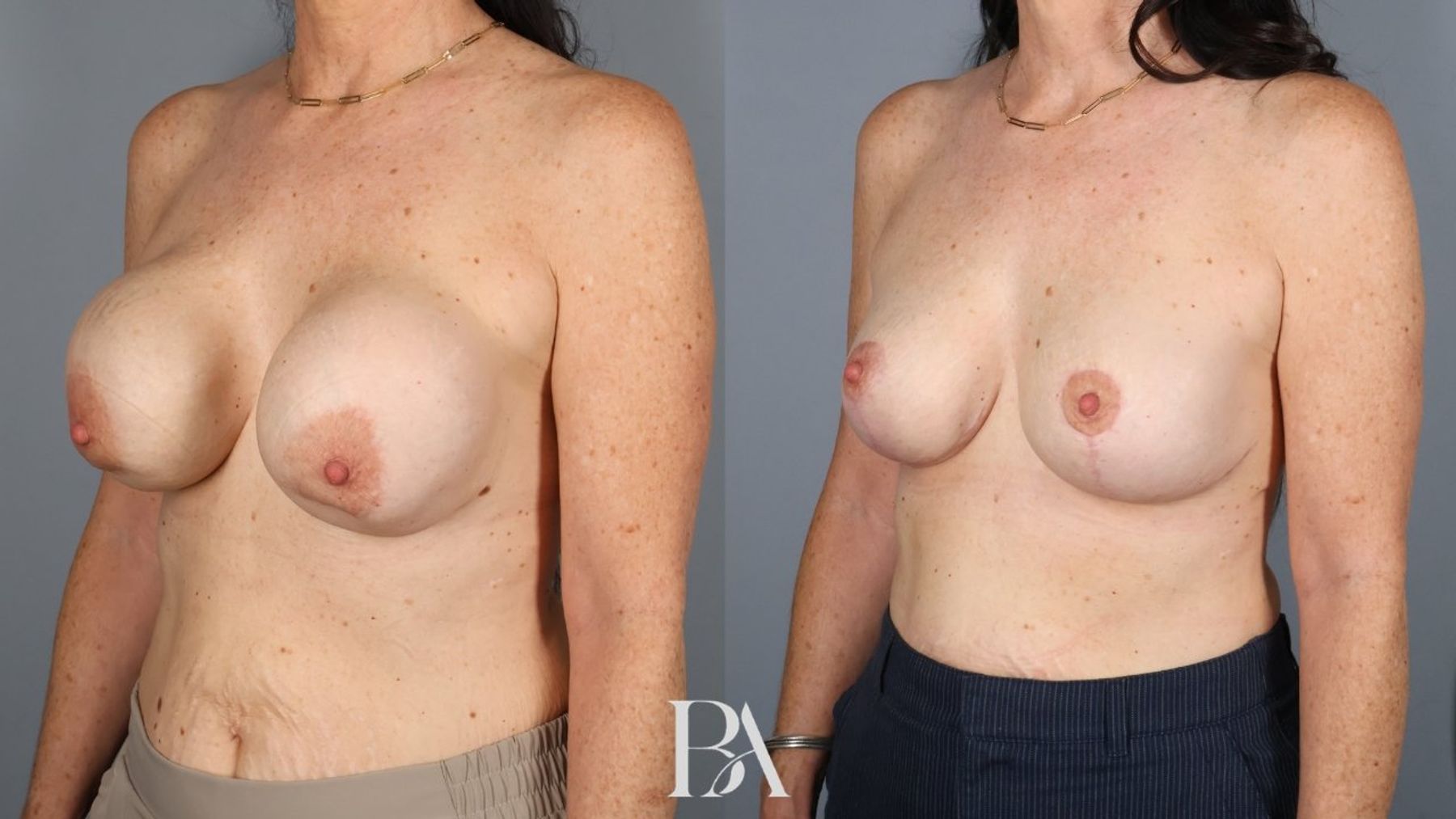
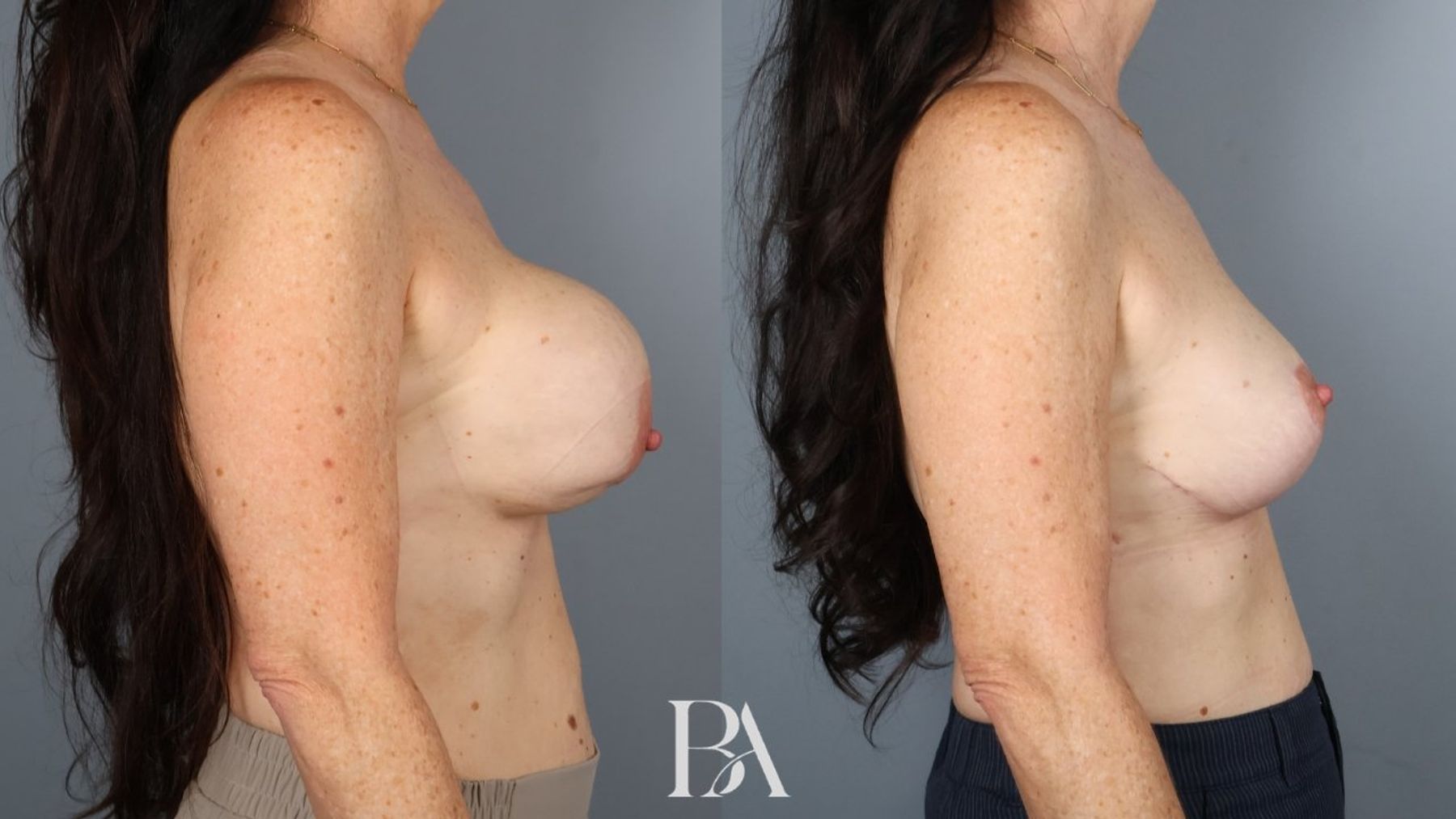
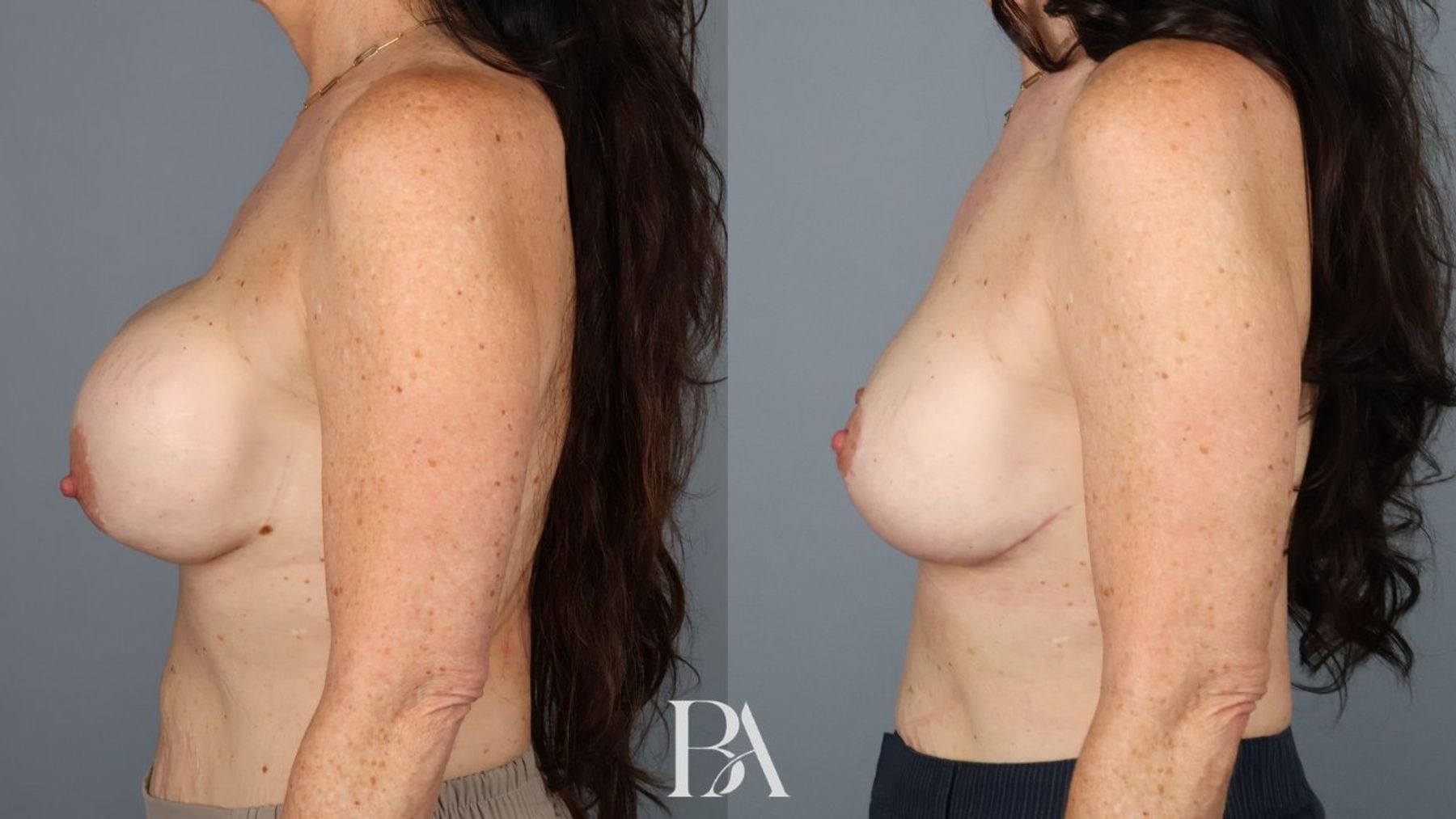
A woman in her 50s developed painful capsular contracture around prepectoral implants placed 28 years earlier and felt her breasts were too large. Dr. Azadgoli performed a capsulectomy with implant replacement, downsizing by 140cc, and a lift.
A woman in her 50s had prepectoral implants placed 28 years earlier through a periareolar incision. Over time she developed severe capsular contracture that caused pain and discomfort, and she felt her breasts were too large. Dr. Azadgoli performed a capsulectomy with implant replacement, downsizing by 140cc, together with a breast lift.
Why this approach
The decisions that shaped this surgical plan.
- Approach built on top of the prior surgery. The technique was selected to address the specific issues from the original procedure without sacrificing what worked.
- Both sides treated in the same session — symmetric planning, identical tissue handling, and matched final contour are easier to achieve in one operative window than in two.
- Several procedures combined into one operative plan. The order, the tissue handling, and the recovery were all designed for the combined case, not bolted together from individual plans.
Pre-op preparation
What to do before surgery. Specific to this case.
- Discontinue blood thinners (NSAIDs, aspirin, fish oil, vitamin E) two weeks out. Acetaminophen remains safe; the full list is reviewed at pre-op.
- Full nicotine cessation 6 weeks pre- and post-op. This includes vapes and nicotine replacement products; the constriction effect is the same.
- Arrange button-front or zip-front tops for the first three weeks — overhead reaching is restricted. A drain holder or apron is provided.
- Confirm a driver for surgery day and a companion who can stay through the first night.
- 2 additional procedures planned — plan for at least 2 weeks of in-home help rather than the standard 1 week.
Recovery timeline
Milestones specific to this case. Individual recovery varies.
- Day 1–7
Bilateral healing takes a slower start. Expect more chest-wall fatigue through day 5 and a stricter no-lifting rule for the first 10 days.
- Week 2
Activity ramps up cautiously: longer walks, no lifting yet. Most patients return to desk work this week.
- Week 4
Light cardio and most desk-work activities cleared. Lifting limit increases to 15 lb. Scar massage typically starts now.
- Week 6
Cleared for most activity; the longest-recovery component still sets the pace. Strength training holds another 2 weeks.
- Month 3
Most patients consider this the "final result emerges" milestone. The remaining 10 percent of refinement plays out through month 6.
- Month 6
Final shape continues to settle. Revised areas commonly look their best between months 9 and 12.
Continued care
Recommended aftercare, skincare, and MedSpa services for Implant Removal and Replacement.
- Compression bra continuously for 4 weeks, daytime for 8 weeks
- No lifting above 10 lb for the first 3 weeks
- Sleep elevated for the first week
- Scar management protocol at 3 weeks
- Gentle implant massage from week 4 if directed
- Medical-grade silicone sheeting on the incision lines
- SkinCeuticals C E Ferulic for scar healing
- SPF 50+ on incisions for 12 months
- Indiba radiofrequency for tissue recovery
- LED light therapy weekly for the first 8 weeks
- Fractional laser for scar refinement after 3 months if needed
- Aftercare
Bilateral HBOT protocol — 10–15 sessions over the first 6 weeks.
Bilateral procedures heal more reliably with sustained HBOT.
- Aftercare
Revision protocol pushes scar work out by 14 days vs. the primary-case schedule.
Revised tissue tolerates active treatment less well than primary cases.
- Skincare
Scar plan combines silicone sheeting plus topical tape for sustained pressure.
Revised scars respond best to sustained, layered pressure therapy.
- Aftercare
Recovery plan tracks the longest-recovery procedure; assistance at home is the working assumption for 2 weeks.
Combination procedures stack recovery demand.
- Coordination
Capsule pathology reviewed before the 6-week visit; results inform any further work.
Pathology results may shape ongoing surveillance or treatment planning.